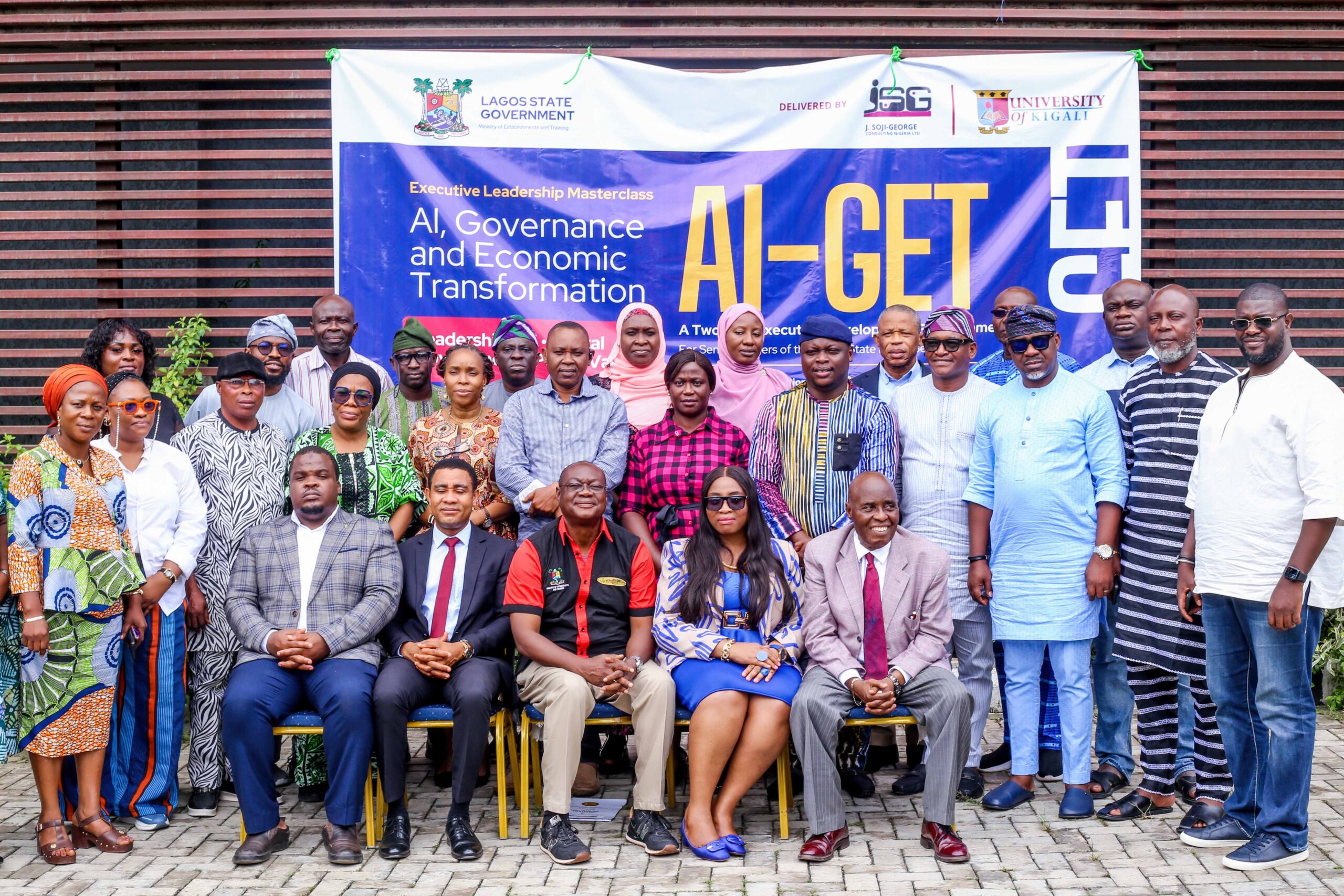
LAGOS, NIGERIA: The University of Kigali (UoK) has expanded its executive education footprint beyond Rwanda, partnering with J. Soji-George Consulting Nigeria Limited and the Lagos State Ministry of Establishments and Training to deliver an AI, Governance and Economic Transformation (AI-GET) Executive Leadership Masterclass for senior public officials.
Held on 7–8 October 2026 at the Education Resource Centre, Ojodu, Lagos, the programme brought together 179 participants to explore how artificial intelligence, transformational leadership and responsible innovation can strengthen governance, institutional performance and public-service delivery.
The initiative reflects UoK’s growing commitment to advancing African-led solutions to leadership, governance and development challenges.
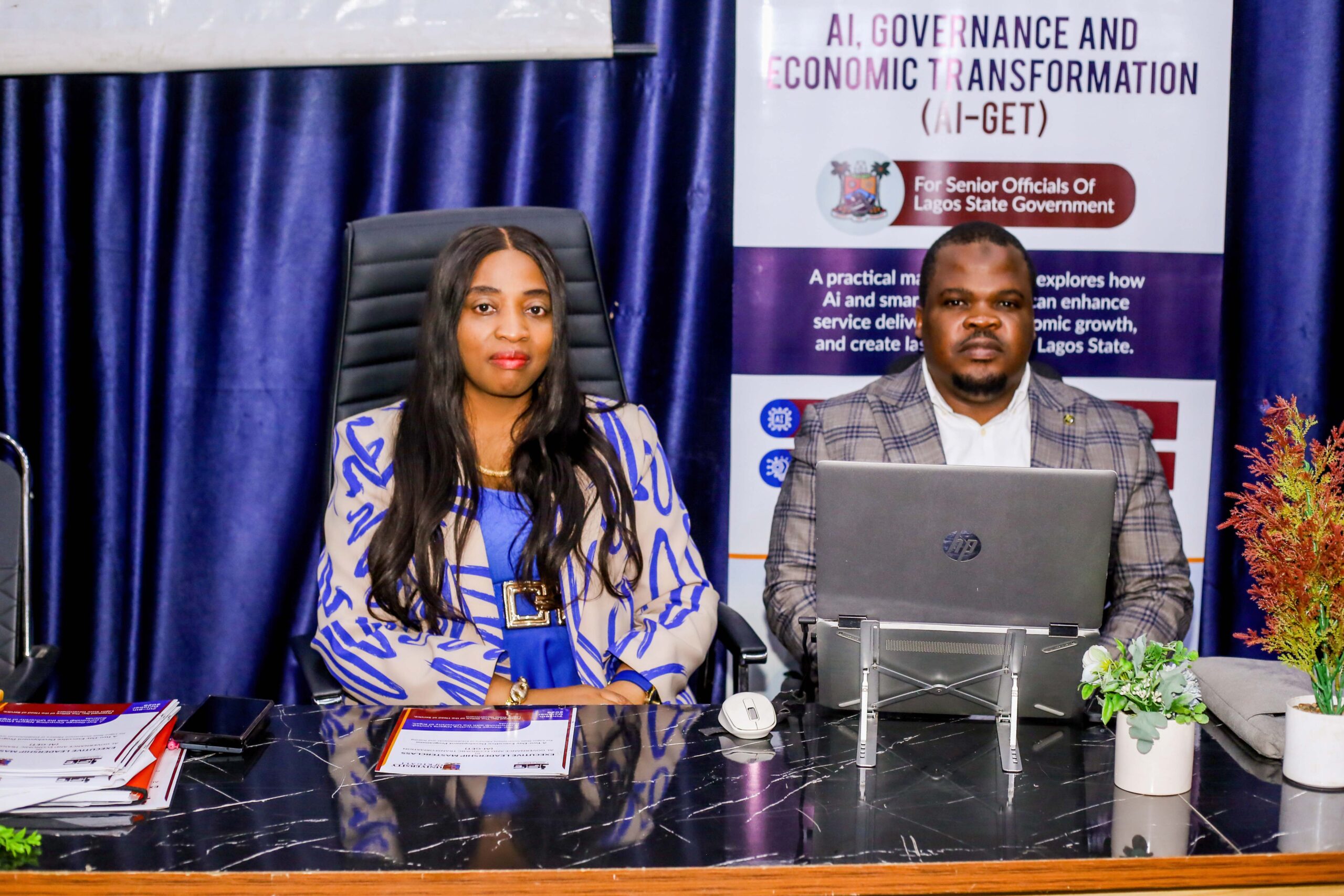
Beyond AI Awareness: Leadership for Institutional Transformation
Rather than focusing exclusively on technology, the masterclass examined how public officials can align leadership, policy, institutional capacity, data and accountability to deliver meaningful transformation.
Participants explored AI literacy, emotional intelligence, transformational leadership, economic transformation and responsible AI governance, including data protection, transparency, human oversight and institutional accountability.
A distinctive feature was its practical orientation. Participants identified persistent service-delivery challenges within their ministries, departments and agencies (MDAs) and considered how emerging technologies, institutional collaboration and effective leadership could address them.
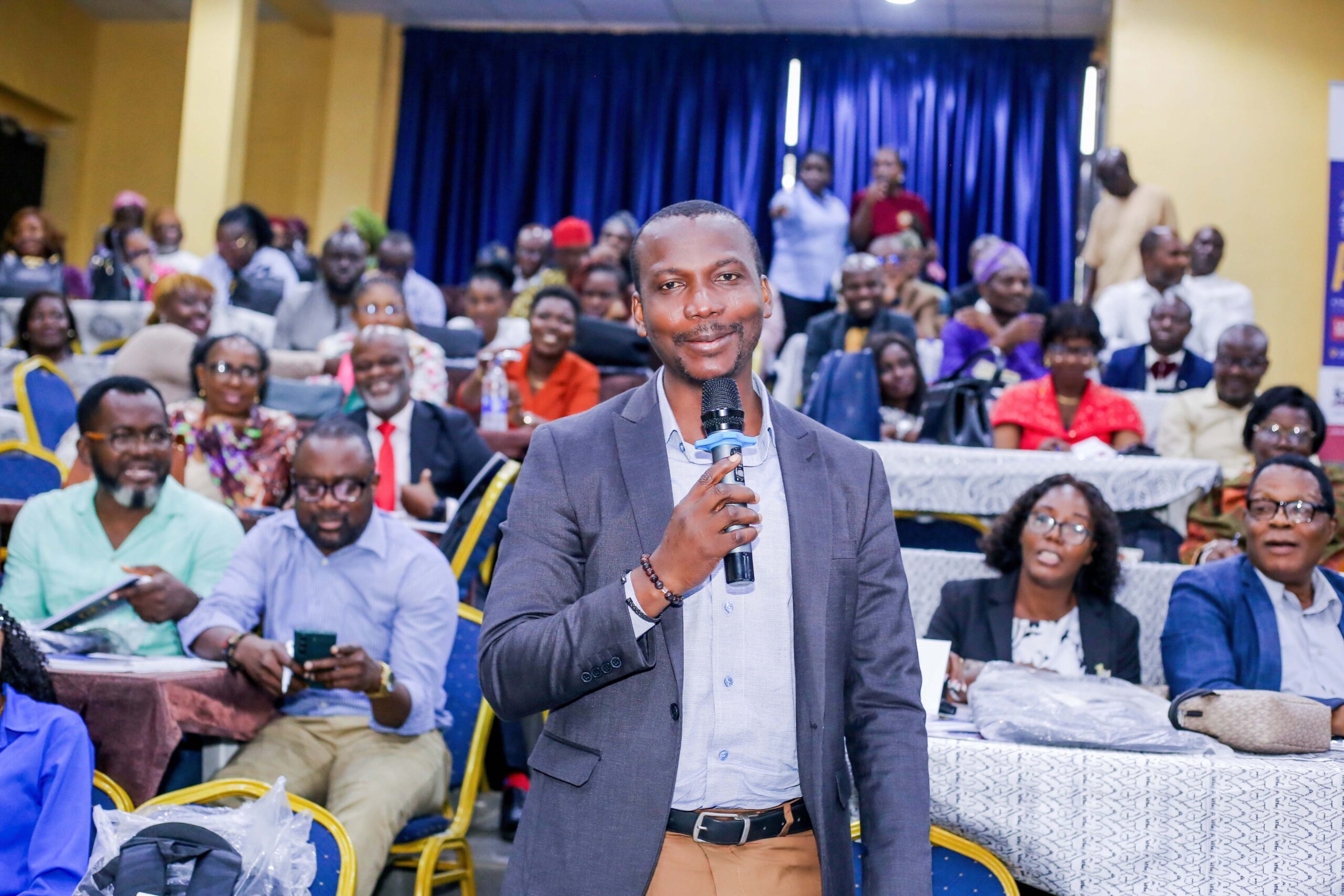
Professor Ogechi Adeola, UoK’s Deputy Vice-Chancellor for Research, Innovation and Enterprise, served as Lead Facilitator, leading sessions on transformational leadership, responsible AI and governance while integrating the programme’s learning into a proposed 90-day implementation framework.
Professor Olusoji James George, programme convener and Professor of Organisational Behaviour, Human Resource Management and Business Strategy at the University of Lagos, addressed emotional intelligence, transformational leadership and organisational change.
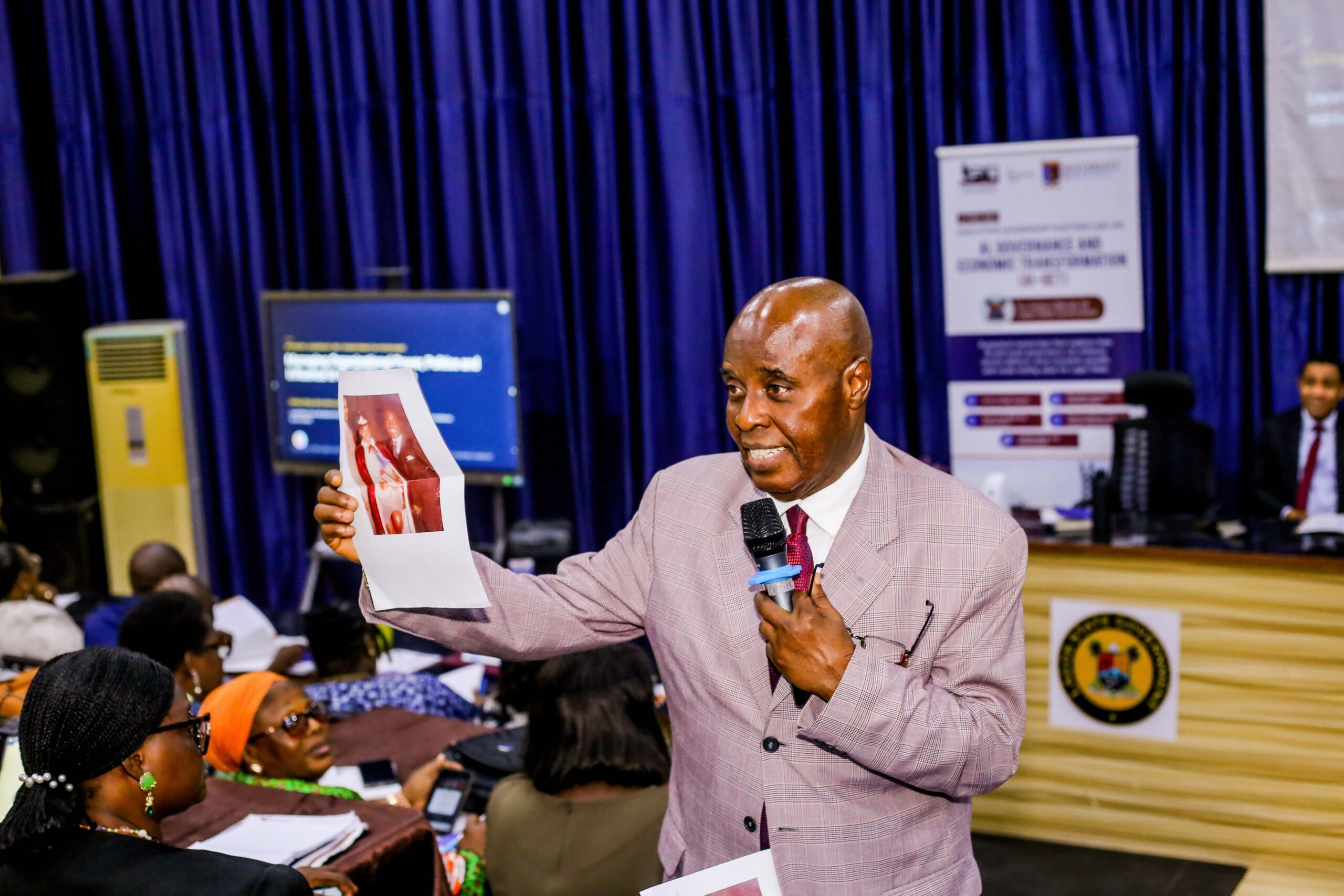
Dr Luqman Afolabi, Dean of UoK’s School of Economics, Finance and Accounting, examined economic transformation, public finance, revenue and digital-state foundations.
Professor Victor Odumuyiwa of the University of Lagos facilitated executive AI literacy and generative AI sessions. Professor David Seyi Akanbi, President and Chancellor of American Open University, Global Campus Nigeria, delivered an invited session on the technical, political, and organisational considerations underlying AI adoption.
Rwanda’s Innovation Experience in Focus
The masterclass drew on Rwanda’s experience in results-oriented governance, institutional coordination and public-sector innovation, creating opportunities for practical knowledge exchange between Rwanda and Nigeria.
Rwanda’s performance-contracting framework, Imihigo, illustrated how leadership, accountability and institutional commitment can support effective implementation.
The Zipline Rwanda case study demonstrated how government priorities, regulation, private-sector capabilities and institutional partnerships can combine to address healthcare delivery challenges.
Anthonio B. Pinheiro, Zipline’s Country Director for Nigeria, complemented the case study with practical insights into autonomous logistics, operational sustainability and public-sector partnerships.
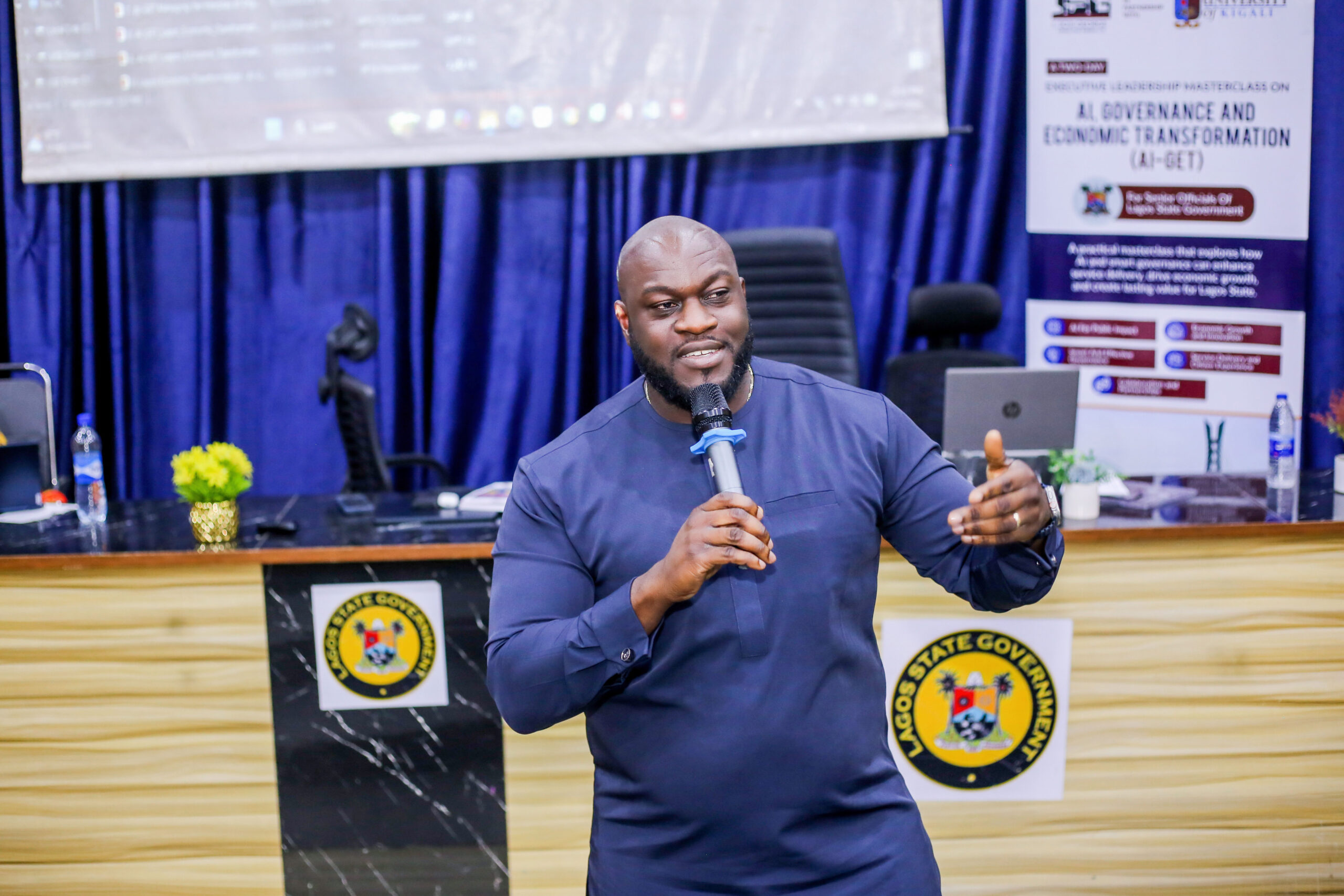
Together, these perspectives reinforced a central message: successful digital transformation requires more than innovative technologies. It depends on capable institutions, effective partnerships, responsible governance and sustained execution.
Participants were introduced to a proposed 90-day implementation roadmap, encouraging their institutions to identify priority service challenges, establish baseline measures, test feasible improvements and assess progress before scaling initiatives.
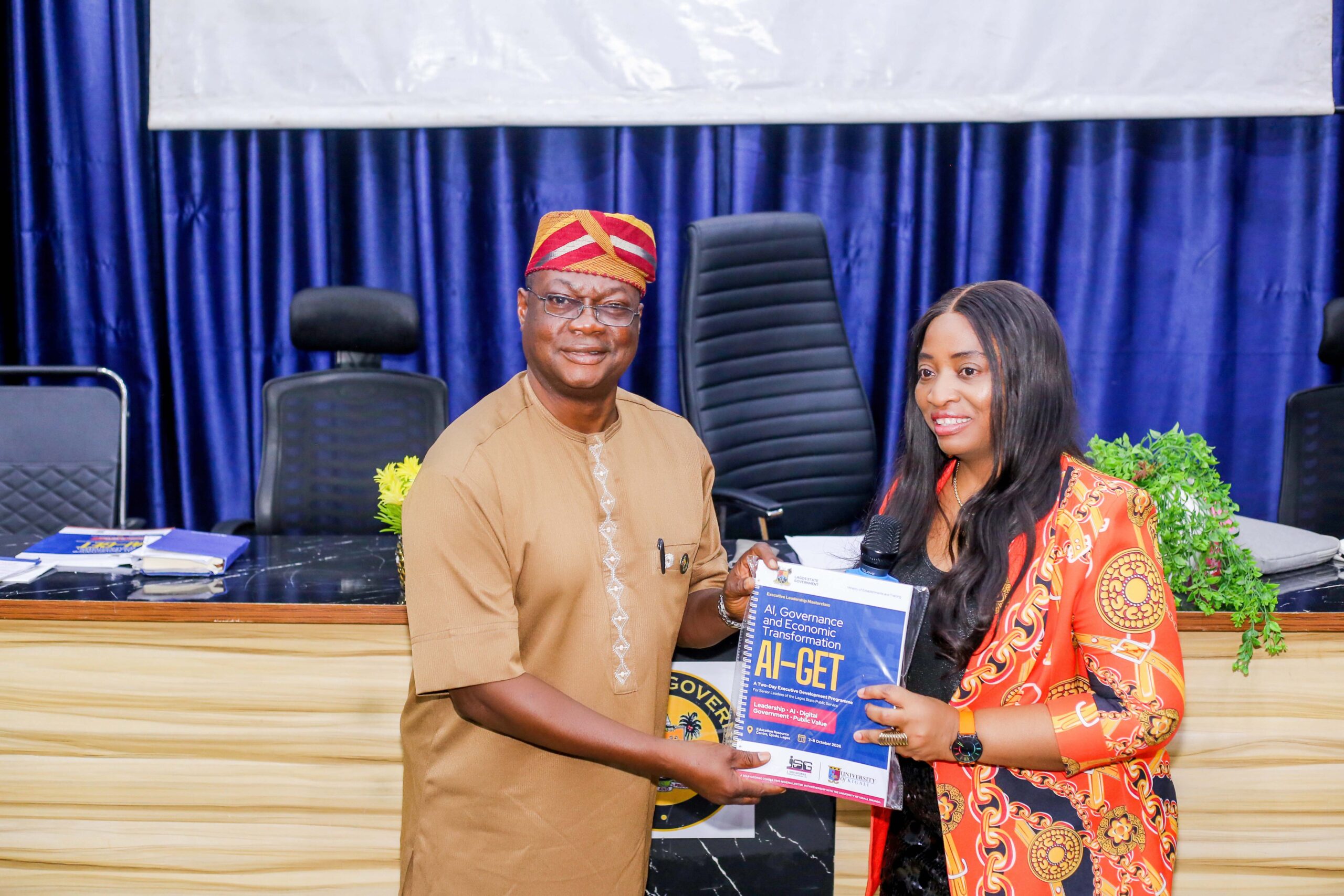
A printed AI-GET participant handbook, also circulated digitally, supported learning throughout the programme. Bringing together governance frameworks, comparative cases, practical exercises and implementation worksheets, it provided participants with resources for translating classroom learning into workplace action.
The handbook was formally presented to Mr Adedolapo Sulaimon Ajayi, Director of Administration and Human Resources at the Lagos State Ministry of Establishments and Training.
Strengthening African Partnerships and Institutional Capacity
Beyond the immediate training outcomes, the programme demonstrates the expanding role of African universities in executive education, policy innovation and public-sector capacity development across national borders.
For the University of Kigali, the partnership represents an important contribution to its internationalisation agenda and its ambition to connect research, innovation and enterprise development with practical institutional needs.
The collaboration also underscores the value of South-South knowledge exchange, enabling African institutions to share experiences, adapt relevant innovations and develop solutions responsive to their respective governance and development contexts.
As artificial intelligence reshapes public administration and economic development, the Lagos AI-GET initiative reinforces an important principle: technology alone cannot transform institutions. Effective leadership, responsible governance and the capacity to translate innovation into measurable public value remain indispensable.
Through initiatives such as AI-GET, the University of Kigali continues to demonstrate how African universities can extend their influence beyond classrooms and national borders, contributing to the development of future-ready institutions and leadership across the continent.