University of Kigali Hosts Supply Chain Experts for Capacity Building
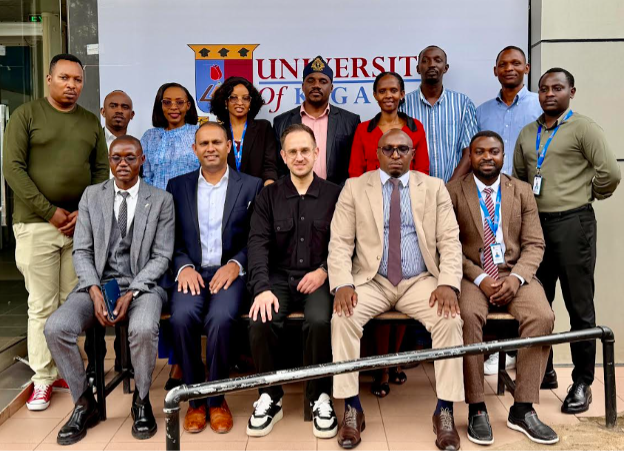
The University of Kigali (UoK), through its Centre for Applied Logistics and Supply Chain Management (CALSCM) and Department of Procurement and Supply Chain Management, successfully hosted a three-day “Train the Trainer” Seminar on Case Study Teaching from November 10–12, 2025. The seminar was conducted by Dr. Benjamin Nitsche, an External Senior Lecturer at the Berlin University of Technology, Germany, in collaboration with Dr. Simon Peter Nadeem from Learn Logistics by Kühne Foundation, Germany. The Guests were welcomed by University of Kigali Vice Chancellor, Prof George Kimathi, Dr. Ronald Kwena, Acting Deputy Vice Chancellor for Research, Innovation & Enterprise / Director of CALSCM, Dr Joseph Akumuntu, Programme Leader for Logistics and SCM and Mr Luzinda Umar, The Head of Department – Procurement and Supply Chain Management. The Vice Chancellor noted strides made in building capacity in Logistics and SCM supported by Learn Logistics by Kühne Foundation. The highly interactive training brought together UoK academic staff, postgraduate facilitators and students with the aim of enhancing pedagogical competence in experiential and case-based learning. Participants were equipped with innovative approaches to integrating industry case studies, simulation tools, and data-driven problem-solving techniques into classroom teaching, ensuring greater alignment between academia and real-world logistics practice. As part of the seminar, participants undertook field visits to Inyange Industries and AGL Rwanda, two leading players in Rwanda’s logistics and supply chain ecosystem. The visits provided firsthand exposure to operational excellence, value chain integration, and logistics digitalization, offering practical insights into the complexities of supply chain management in the Rwandan context. The field engagement also reinforced the importance of industry-academic collaboration in developing practical competencies for the next generation of logistics professionals. This seminar follows a series of specialized lectures and training workshops organized under the partnership between University of Kigali and the Learn Logistics by Kühne Foundation. Earlier this year, UoK hosted Dr. Ullrich Förster, a former high-level logistics executive and expert in Digitalization in Logistics, Sustainability, Decarbonization, and Supply Chain Leadership, who delivered a Guest Lecture on Operational Excellence and Project Management in Logistics. Dr. Förster was accompanied by Dr. Lester Shawa, Regional Director of Learn Logistics by Kühne Foundation (Southern Africa), who emphasized the Foundation’s commitment to capacity development and applied logistics education across Africa. The University of Kigali–Kühne Foundation collaboration, formalized through a Memorandum of Understanding, established the Centre for Applied Logistics and Supply Chain Management (CALSCM) at UoK. The Centre serves as a hub for applied research, training, and professional development, supporting Rwanda’s logistics sector in achieving global competitiveness and sustainability. Speaking during the closing session, Dr. Ronald Kwena, Acting Deputy Vice Chancellor for Research, Innovation and Enterprise and Director of CALSCM, expressed deep appreciation to the Kühne Foundation and the Learn Logistics team for their ongoing support: “The continued collaboration with Learn Logistics by Kühne Foundation demonstrates a shared commitment to excellence in logistics education and research. These capacity-building initiatives not only strengthen our faculty’s teaching methods but also position UoK as a regional leader in applied logistics and supply chain innovation.” The seminar marks another milestone in UoK’s journey toward enhancing academic excellence, industry relevance, and sustainable logistics practices in Rwanda and the broader region. Future collaborations will include joint research projects, industry certifications, and student exchange opportunities aimed at deepening practical exposure and advancing the logistics discipline. The University of Kigali is a leading institution in Rwanda committed to academic excellence, innovation, and community impact. Through its Centre for Applied Logistics and Supply Chain Management, UoK collaborates with international partners to promote research, professional training, and capacity building in logistics, operations, and sustainable development.
Global Exposure, Lifelong Impact: Student Exchange Highlights
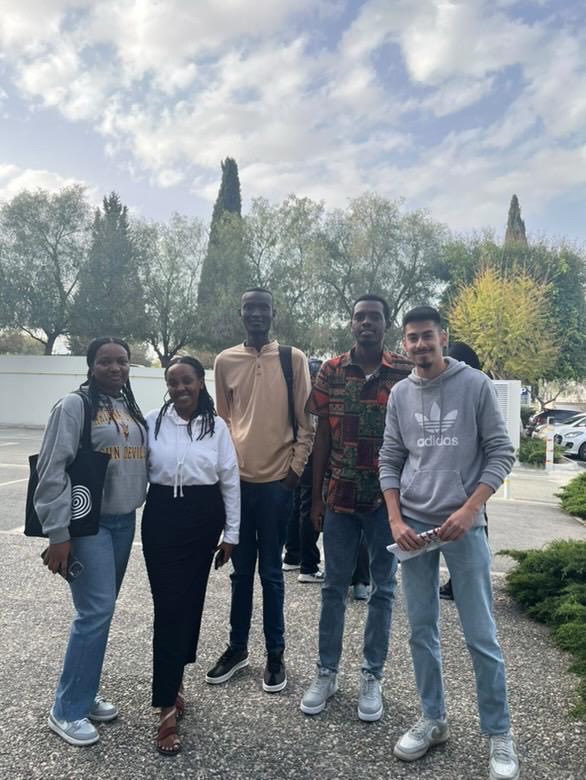
As part of UoK’s commitment to holistic, world-class education, six students from the School of Business Management and Economics have recently participated in two transformative international exchange programs. Global Exposure, Lifelong Impact: Student Exchange Highlights From February 25 to June 17, 2025, four students; Bruce Kayitsinga Irakoze, Giramata Sabine, Mwebaze Wilber, and Lisa Cynthia Maranatha, took part in the Erasmus+ Mobility Programme at the University of Nicosia, Cyprus. Fully funded by Erasmus+, this experience offered more than academic enrichment. It promoted personal growth, global exposure, and cross-cultural learning. “My Erasmus journey at the University of Nicosia has been nothing short of transformative. The combination of quality education and an immersive cultural setting has strengthened my personal and professional development.”, Bruce Kayitsinga Irakoze “Studying at the University of Nicosia through Erasmus has been a defining chapter in my academic and personal growth… It broadened my horizons and strengthened my belief in crossing different cultural terrain.”, Lisa Cynthia Maranatha The program immersed students in a dynamic learning environment where innovative teaching methods, interactive classrooms, and diverse global perspectives redefined their academic experiences. Beyond the lecture halls, students explored Cyprus’s rich history, warm hospitality, and stunning Mediterranean landscapes. The Erasmus experience was about growth, resilience, and cultural exchange. Every shared meal, weekend adventure, and language exchange contributed to unforgettable memories.”, Mwebaze Wilber. “The Erasmus program provided me with more than just an academic experience; it broadened my horizons and helped me grow as an individual”, Giramata Sabine. Students engaged in a variety of academic and social activities, building lifelong friendships and gaining confidence through exposure to different cultures and ways of life. The testimonials reflect how this opportunity instilled adaptability, global awareness, and independence; qualities that will benefit them far beyond their university years. Building on this global momentum, Ms. Michele and Mr. Bahati, also from the same school, departed on 30th June for a three-month exchange at DHBW University-Ravensburg, Germany, running through 30th September 2025. This programme, fully funded by our long-standing partner DHBW University provides hands-on exposure to international business practices and applied learning in a dual-education system. Both programmes reflect the University of Kigali’s strategic vision: to provide students with meaningful global experiences that enhance academic learning, cultural competence, and career readiness. We remain grateful to Erasmus+, the University of Nicosia, and DHBW University – Ravensburg for partnering with us in empowering future leaders. Global Exposure, Lifelong Impact: Student Exchange Highlights
Global Partnerships: Innovation & Collaboration
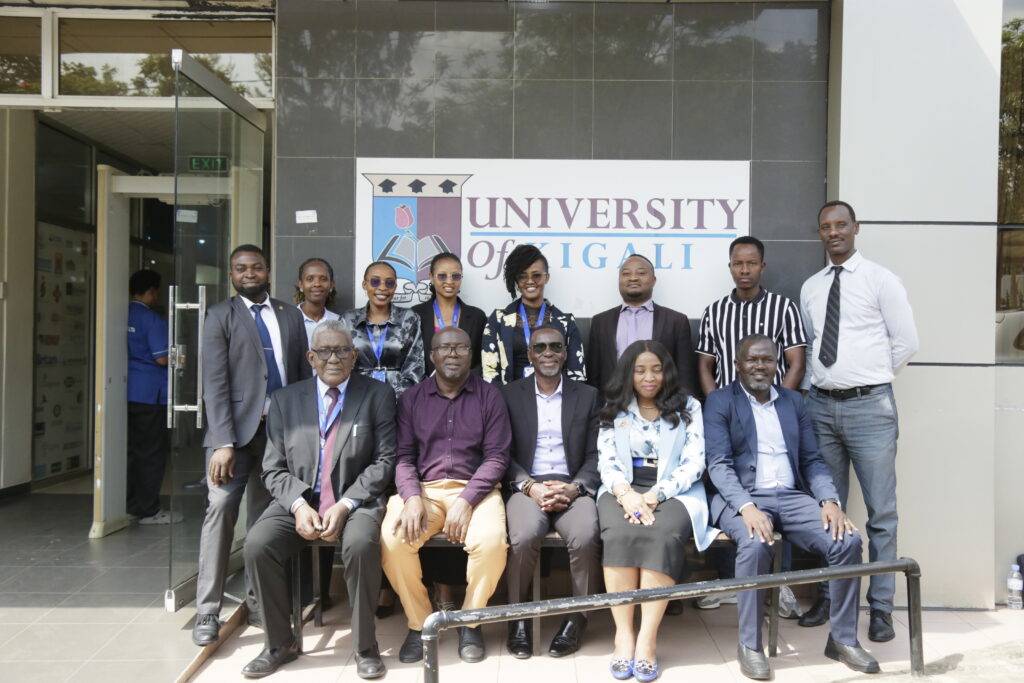
On 30th June 2025, our University proudly hosted Prof. Adegoke Oke from Arizona State University (ASU) for a high-impact visit focused on driving innovation and sustainable supply chain management in Africa. Global Partnerships: Innovation & Collaboration Highlights of the Visit: Delivered a keynote lecture: “Tackling Africa’s Challenges: Innovations and Supply Chain Management.” Engaged in strategic discussions with UoK leadership on joint research, faculty exchanges, and funding opportunities. Shared expertise on innovation ecosystems, sustainable operations, and Africa’s evolving role in global supply chains. This collaboration reinforces UoK’s commitment to global partnerships and research-driven solutions that address Africa’s most pressing challenges. Expanding our Global Footprint Ahead of the staff exchange program, the Director of International Affairs and Partnership hosted two distinguished delegations: 23rd June: Representatives from Education Malaysia, including the Senior Regional Executive and the Director for the African Region at EMGS, under the Ministry of Higher Education Malaysia. 25th June: The Director of International Relations & Confucius Institute and the International Coordinator for Recruitment and Admission from the International Business Academy, Denmark. Discussions focused on advancing collaborations in: Student and staff exchanges Scholarships and short courses Collaborative research, conferences, and workshops Global Partnerships: Innovation & Collaboration
UoK Musanze Celebrates Ukwezi Kw’Ubumwe n’Ubudaheranwa
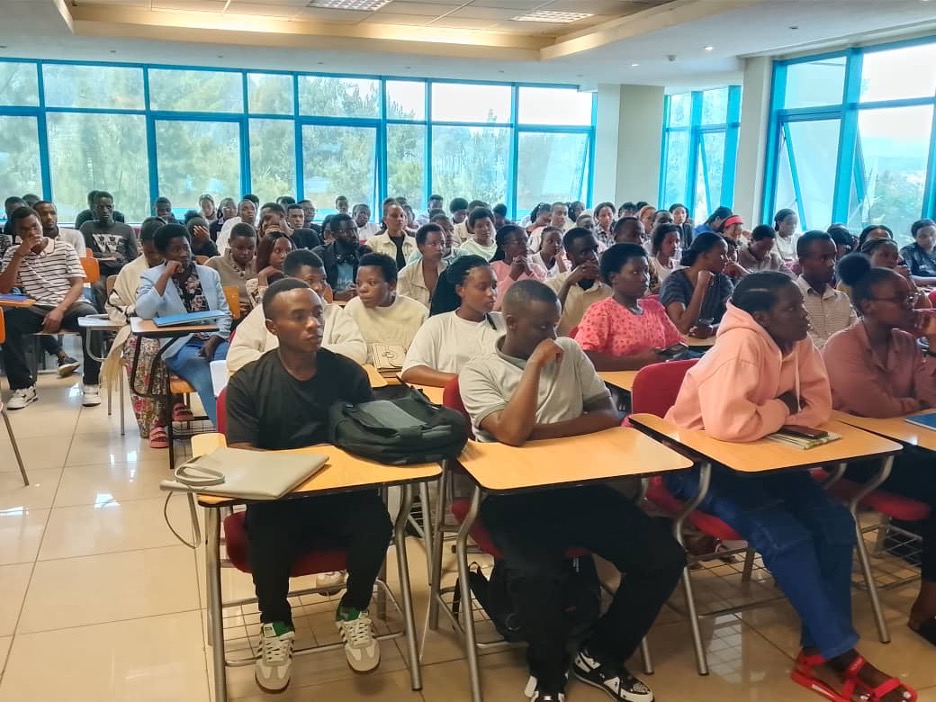
UoK Musanze Celebrates Ukwezi Kw’Ubumwe n’Ubudaheranwa. On Monday, October 27, 2025, the University of Kigali, Musanze Campus, hosted an engaging and inspiring discussion aimed at promoting Ndi Umunyarwanda values among the youth. The event brought together students, staff, and local leaders to reflect on the importance of national identity, unity, and shared responsibility in sustaining Rwanda’s progress. In his welcoming remarks, the Principal of the University of Kigali, Musanze Campus, Dr. Leopord HAKIZIMANA, emphasized that courage and leadership are not bound by age or status. He highlighted the transformative role that young people continue to play under the visionary leadership of His Excellency Paul Kagame, President of the Republic of Rwanda, in advancing the nation’s unity, resilience, and sustainable development. Dr. Hakizimana also encouraged students to uphold integrity, patriotism, and accountability in their academic and social lives, noting that embracing Ndi Umunyarwanda values strengthens both personal character and community harmony. Participants expressed appreciation for the initiative, describing it as an eye-opening opportunity to deepen their understanding of what it truly means to be Rwandan. UoK Musanze Celebrates Ukwezi Kw’Ubumwe n’Ubudaheranwa As Rwanda observes October as the month of Unity and Resilience, the honorary guest, Dr. Pastor MPORANA Jonas MATABARO of Restoration Church, reminded students that the future of our country depends on fostering and preserving Rwandans’ unity and resilience, particularly among the youth. He exhorted them to make these values the pillars of their life. In response to the growing challenge of misinformation, through supplements, the students showed their readiness in engaging in the fight against the propagation of Genocide Ideology via social media, expressing their thoughts, sharing true stories to battle for the true image of the country. Throughout the Talk, one of the most remarkable achievements was the continued ability to inspire and empower future generations to uphold the principles of solidarity, fortitude, and honesty values that remain central to Rwanda’s social fabric. Speakers reminded participants that true patriotism lies in action, empathy, and a shared commitment to protecting the nation’s unity. Students were encouraged to take an active role in fostering a culture of peace, understanding, and collaboration, not only within the university but also in their communities. By practicing the spirit of Ndi Umunyarwanda in their daily lives, they contribute to building a society rooted in integrity, resilience, and mutual respect. The discussion also highlighted how Rwanda’s post-genocide transformation has been guided by unity and reconciliation, serving as a model of hope for other nations. Many students shared their personal reflections, acknowledging the importance of youth involvement in sustaining these hard-earned achievements. The speakers commended the University of Kigali community for providing a platform where young people can freely express their ideas and embrace the values that define Rwandan identity. As the event drew to a close, the atmosphere was filled with enthusiasm and pride. Attendees collectively reaffirmed their dedication to national unity, chanting in unison: “Ubumwe bwacu ni zo mbaraga zacu” — Our unity is our strength! .The session ended on a powerful note of optimism, leaving everyone inspired to become true ambassadors of unity and resilience in their academic journeys and beyond.
Rwandan Scientists Shine on Stanford’s Global Top 2% List
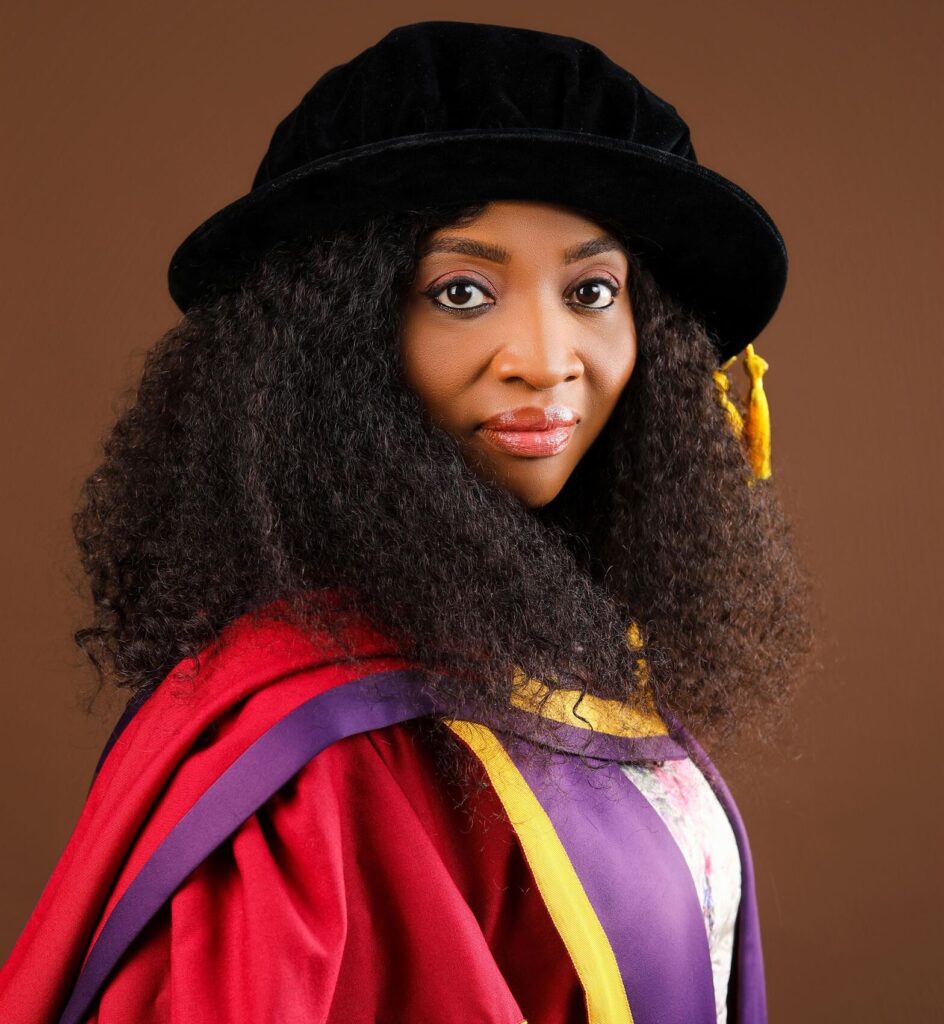
The University of Kigali (UoK) proudly joins the nation in celebrating 14 distinguished scientists affiliated with Rwandan institutions who have been ranked among the world’s most influential researchers in the Stanford University, Elsevier Global Top 2% Scientist List (2025 Edition). Rwandan Scientists Shine on Stanford’s Global Top 2% List The Stanford–Elsevier list is one of the most respected global rankings, identifying the top 2% of scientists worldwide based on career-long citations, research productivity, and global impact, using Scopus data. Inclusion in this prestigious list reflects international recognition for academic excellence and significant contributions to scientific knowledge. Among the honourees is Professor Ogechi Adeola, Deputy Vice-Chancellor of the University of Kigali, recognised for her exceptional scholarship in marketing, entrepreneurship, tourism, gender, and sustainable development. In a list largely dominated by health and medical sciences, her inclusion stands out, representing business and management disciplines and highlighting the growing diversity of Rwanda’s research impact. This achievement not only celebrates individual excellence but also showcases Rwanda’s rising prominence in global research and innovation, reinforcing the country’s ambition to become a leading hub of knowledge in Africa. Rwanda’s 2025 Scientists Recognised in the Stanford–Elsevier Global Top 2% List Paul E. Farmer – University of Global Health Equity Abraham Mitike Haileamlak – University of Rwanda Ogechi Adeola – University of Kigali Ayman Ahmed – Rwandan Ministry of Health Torsten Schöneberg – University of Global Health Equity Olivier Uwishema – Oli Health Magazine Organization Jennifer L. Rickard – Centre Hospitalier Universitaire de Kigali David A. Shaye – Centre Hospitalier Universitaire de Kigali Corine Kakizi Karema – Quality and Equity Health Care Alemayehu Amberbir – University of Global Health Equity Léon Mutesa – University of Rwanda Abebe Belayneh Bekele – University of Global Health Equity Emmanuel Edwar Siddig – Pan Africa Biomedical Institute Chester Kalinda – University of Global Health Equity A Message from the University of Kigali Speaking on this remarkable achievement, Professor George Kimathi, Vice Chancellor of the University of Kigali, stated: “We are delighted that Rwanda’s growing academic excellence is being recognised globally. Having 14 scientists on the Stanford list is a national triumph, and we at the University of Kigali are especially proud of Professor Adeola’s inclusion. This recognition reflects our commitment to research, innovation, and global impact, as we continue to position Rwanda as a hub of knowledge and academic excellence.” The University of Kigali extends its heartfelt congratulations to all the recognised scientists and reaffirms its dedication to advancing world-class research, impactful scholarship, and sustainable development in Rwanda and beyond. For more details on the Stanford–Elsevier Global Top 2% Scientist List and its methodology, visit the dataset published by Elsevier:🔗 Elsevier – Global Top 2% Scientist Dataset
University of Kigali Participates in National Umuganda
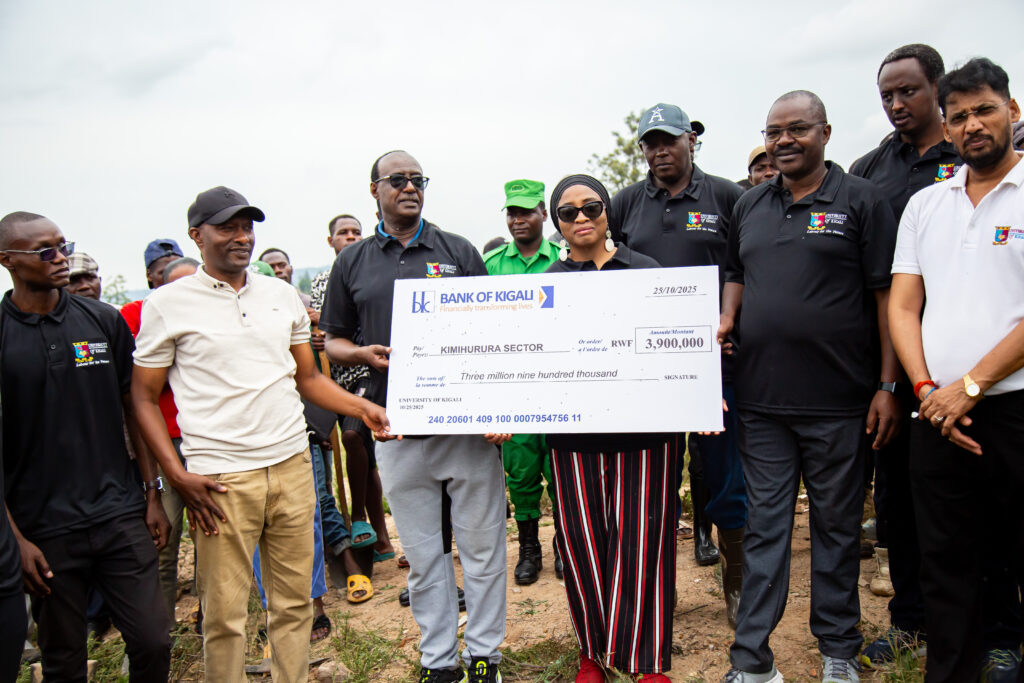
The University of Kigali (UoK) proudly took part in the National Community Work (Umuganda) held in the Kimihurura Sector, demonstrating its continued commitment to community engagement and national development. Umuganda, a uniquely Rwandan tradition of collective community service, takes place on the last Saturday of every month and plays a vital role in promoting unity, social responsibility, and sustainable development. It is one of the pillars of Rwanda’s success in building clean, safe, and cohesive communities across the country. University of Kigali Participates in National Umuganda In line with this national spirit, the University of Kigali joined residents of Kimihurura to contribute to local development activities and to give back to the community. As part of the initiative, UoK donated Health Insurance (Mutuelle de Santé) to underprivileged community members, a gesture that reinforces the university’s mission to create lasting social impact beyond the classroom. Speaking during the event, Prof. Nshuti Manasseh, Chairman of the UoK Board of Promoters, emphasized the university’s commitment to community empowerment. He announced that as UoK constructs its new campus in the Kimihurura Sector, it will also create job opportunities for local residents, further strengthening the university’s partnership with the community. University of Kigali Participates in National Umuganda The event was also graced by Mr. Jean-Guy Afrika, Chief Executive Officer of the Rwanda Development Board (RDB), who highlighted the importance of security, personal and environmental cleanliness, and tree planting. He noted that these actions contribute not only to a more beautiful and healthier environment but also support Rwanda’s vision of becoming a carbon-neutral and climate-resilient economy by 2050, ensuring a sustainable and high-quality life for all citizens. Through its active participation in Umuganda, the University of Kigali continues to align with Rwanda’s national agenda of fostering inclusive development, environmental sustainability, and social cohesion, reaffirming its role as a university with a purpose and a partner in national transformation.
University of Kigali Hosts Strathmore University Vice Chancellor
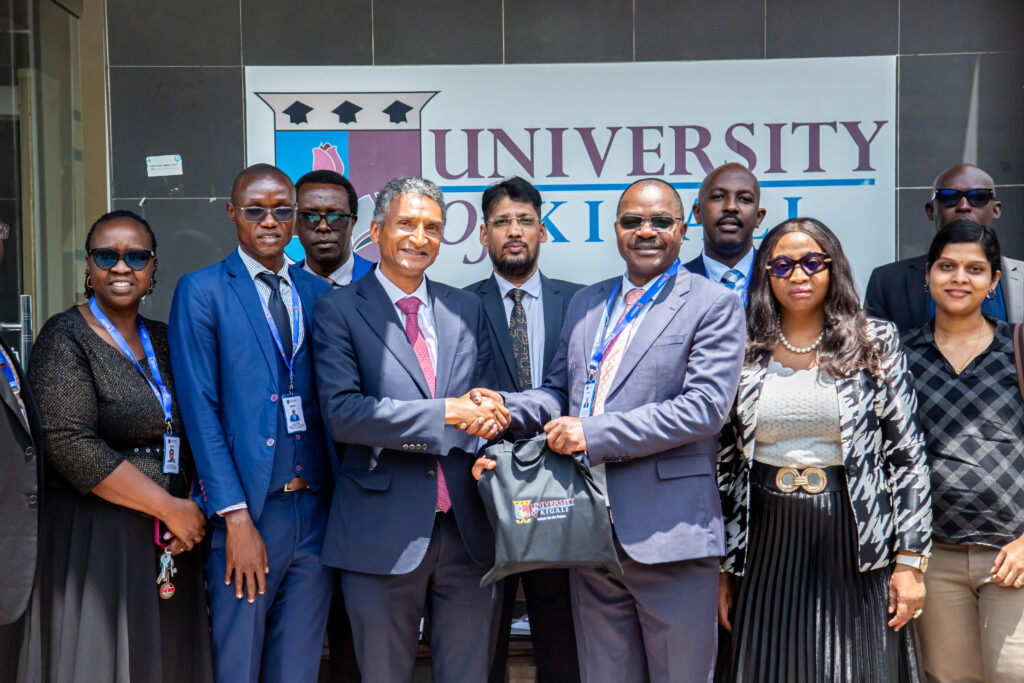
The University of Kigali (UoK) Senior Management was honoured to host Dr. Vincent Ogutu, the Vice Chancellor of Strathmore University, Kenya, during his official visit to the University. The visit marked an important step toward strengthening academic and research collaboration between the two leading institutions, as well as fostering leadership capacity development. University of Kigali Hosts Strathmore University Vice Chancellor Discussions focused on exploring joint initiatives in research, faculty and student exchange, and leadership training, all aimed at enhancing the quality and impact of higher education across the region. Strathmore University, based in Nairobi, Kenya, is a premier institution of higher learning renowned for its excellence in business, information technology, law, and leadership education. The university is recognized for promoting ethical leadership, innovation, and entrepreneurship, making it one of Africa’s most respected and forward-thinking academic institutions. Dr. Ogutu’s visit reflects a shared vision between Strathmore University and the University of Kigali to build a stronger academic network that promotes innovation, excellence, and ethical leadership across the continent.
University of Kigali Top Management conducts Strategic Benchmarking Visits to Kenyan Universities.
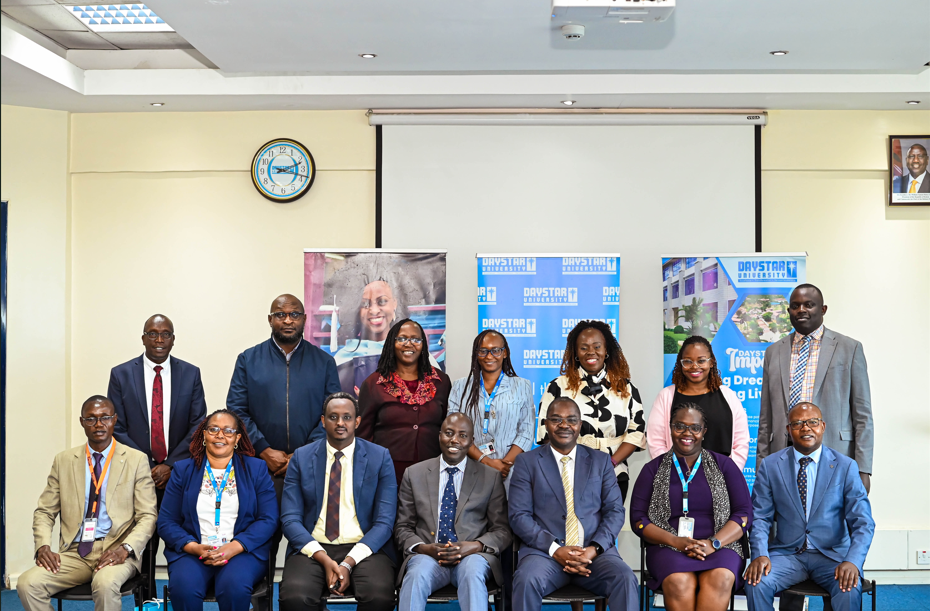
University of Kigali Top Management conducts Strategic Benchmarking Visits to Kenyan Universities. The University of Kigali (UoK) leadership team concluded a week-long benchmarking mission to leading universities in Kenya, aimed at strengthening academic quality, research capacity, and institutional governance in line with UoK’s 2025–2029 Strategic Plan. The high-level delegation included Prof George Kimathi, Vice Chancellor, Dr. Ronald Kwena, Associate Deputy Vice Chancellor Research, Innovation & Enterprise; Dr. Samuel Sindayigaya, Associate Deputy Vice Chancellor Academics; Dr. Wilson Musoni, Deputy Vice Chancellor Administration & Human Resources and Dean, School of Computing and Information Technology; and Mr. Bukomeko Bernadline, Associate Dean, Programmes. The visits to Strathmore University, Daystar University, and the Catholic University of Eastern Africa (CUEA) focused on sharing experiences in research, academic programmes, student support, governance, and institutional management. From 24th to 26th September, the delegation was hosted by Strathmore University. The team engaged with the Centre for Teaching Excellence, which showcased innovative teaching practices and robust quality assurance systems for examinations. The delegation also met with the Institute of Healthcare Management, the Strathmore Research and Consultancy Centre, and the Centre for Intellectual Property & Information Technology, where discussions focused on research commercialization, consultancy, and intellectual property management. Strathmore University’s Vice Chancellor, Dr. Vincent Ogutu, emphasized the importance of culture and values as the foundation of institutional excellence. The visit concluded with a session at Strathmore Business School exploring opportunities for joint research, PhD supervision, and policy-driven innovation. UoK Team Meeting Strathmore University Vice Chancellor UoK Team Meeting Strathmore University Founder Prof Jim McFie UoK Team Meeting Strathmore Staff At Daystar University, the UoK team was hosted by senior management, including the DVC Administration, DVC Academic Affairs & Research, and the Director of Resource Mobilization. UoK Staff at Daystar University The delegation toured new infrastructure developments – including the School of Law Block, School of Nursing Block, student hostels, ablution blocks, a poultry project, water treatment plant, gymnasium, and Heroes Corner – which reflect Daystar’s investment in student welfare and campus expansion. Daystar also shared its successful models for resource mobilization, donor engagement, and alumni giving campaigns – valuable lessons for UoK as it diversifies its revenue streams. At CUEA, the UoK team met with leaders from the Vice Chancellor’s Office, the Directorate of Research and Innovation, the Academic Registry, and the University Press. Key highlights included: Research & Innovation Hubs for collaborative grants and regional partnerships; University Press & Publishing capacity for academic dissemination; Automation of academic registry functions and expansion of global library subscriptions and Innovation Hub for applied research and entrepreneurial initiatives. CUEA’s models offered solutions to some of UoK’s operational challenges such as delayed submission of marks, curriculum gaps, examination quality issues, and low research outputs.
University of Kigali Welcomes Prof. Olu Akinkugbe: A New Era of Academic Excellence and Global Engagement
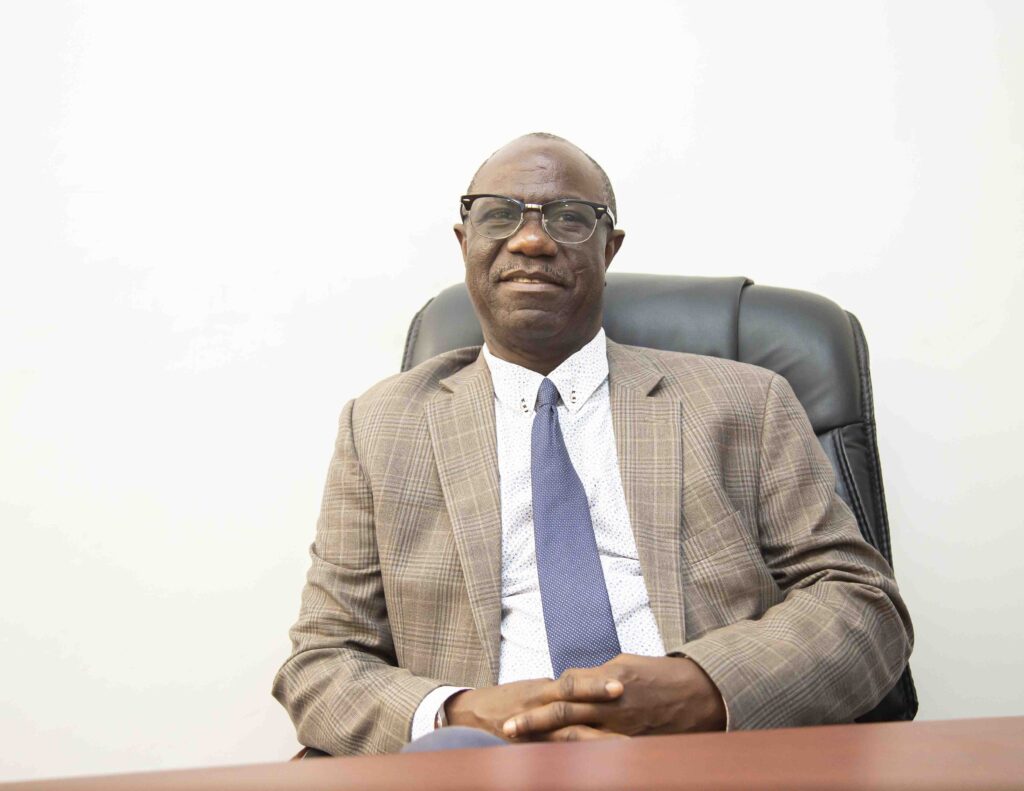
University of Kigali Welcomes Prof. Olu Akinkugbe: A New Era of Academic Excellence and Global Engagement: The University of Kigali (UoK) has added a new chapter to its growth story with the appointment of Prof. Olu Akinkugbe as Deputy Vice-Chancellor, Academic (DVCA). A renowned economist, academic leader, and global policy advisor with more than four decades of experience across Africa, Europe, North America, and Southeast Asia, Prof. Akinkugbe’s arrival marks a strategic milestone in UoK’s pursuit of excellence and innovation. With a doctorate in Applied Econometrics from the University of Ibadan, Nigeria, Prof. Akinkugbe built his early academic foundation as part of the Ford Foundation-sponsored LINK Project, a pioneering global economic modeling consortium. His doctoral thesis developed a 197-equation macro-model of the Nigerian economy, an achievement that positioned him at the frontier of macroeconomic modeling and policy translation. This formative experience has since shaped his lifelong commitment to bridging research, practice, and policy. Prof. Akinkugbe’s career spans some of the world’s most respected institutions. He has taught and led at universities in Nigeria, South Africa, Zambia, Eswatini, Botswana, Namibia, Canada, the United States, and the United Kingdom. Notably, he served as Dean of the largest faculty at the University of Namibia, overseeing more than 25,000 students and 70 staff members, and as Head of Economics at the University of the Witwatersrand, South Africa. He also played a pivotal role in establishing James Hope University and its Business School in Nigeria, where he was the Founding Dean. Beyond his academic leadership, Prof. Akinkugbe has built a reputation for institutional transformation. He has successfully restructured faculties, developed quality assurance frameworks, and cultivated international partnerships. His leadership philosophy emphasizes sustainable governance, financial resilience, faculty development, and community engagement, principles that align seamlessly with UoK’s strategic pillars of academic excellence, innovation, and global impact. Prof. Akinkugbe is also a highly respected policy advisor. His work with the United Nations Development Programme (UNDP), African Development Bank (AfDB), and the Commonwealth Secretariat has influenced economic strategies across Africa, the Caribbean, and the Pacific. He designed Barbados’ national macroeconometric model, advised on agro-processing strategies in Botswana, and supported youth employment initiatives in Zambia. As a prolific scholar, his research covers pressing issues such as energy economics, trade policy, health and education financing, and poverty dynamics. His studies on green finance, intergenerational poverty, and road mortality in the SADC region have informed both academic discourse and real-world policy, reinforcing his ability to translate knowledge into impact. University of Kigali Welcomes Prof. Olu Akinkugbe: A New Era of Academic Excellence and Global Engagement Prof. Akinkugbe joins UoK at a critical moment in the University’s trajectory. His leadership vision focuses on: Strengthening Global Partnerships: Deepening collaborations with international universities, research networks, and industry stakeholders to enhance UoK’s global visibility, foster knowledge exchange, and create pathways for student and faculty mobility. Realigning and Co-Streaming Programs: Continuously reviewing and restructuring academic programs to align with global standards, integrate interdisciplinary learning, and ensure graduates are equipped with skills relevant to the evolving demands of the global economy. Fostering Financial Sustainability: Building resilient financial models that balance innovation with efficiency, diversify revenue streams, and strengthen the University’s long-term capacity to deliver high-quality education and research. Driving Inclusive Growth: Expanding access and equity in higher education while ensuring UoK’s programs remain relevant, innovative, and impactful, empowering students from diverse backgrounds to contribute meaningfully to Rwanda’s socio-economic transformation and Africa’s development agenda. This vision resonates strongly with UoK’s mission of shaping the next generation of leaders, innovators, and change-makers. By combining academic rigor with practical relevance, Prof. Akinkugbe is set to accelerate UoK’s transformation into a hub of excellence and a driver of socio-economic development in Rwanda and beyond. The arrival of Prof. Akinkugbe is more than an appointment, it is a statement of intent. It underscores UoK’s determination to attract world-class talent, expand international collaborations, and deliver education that is globally competitive yet locally relevant. As per Rwanda Government policy of positioning the country as a Continental Educational Hub, the University of Kigali is equipping itself with the leadership needed to rise to this challenge. With Prof. Akinkugbe at the helm of academic affairs, UoK is not only strengthening its internal capacity but also aligning with national and continental development priorities. In the words of many who have worked with him, Prof. Akinkugbe is a “transformative leader with a global outlook and a local heart.” His appointment is a major step in UoK’s journey toward becoming a university of choice in Africa, committed to excellence, relevance, and impact. The University of Kigali is proud to welcome Prof. Olu Akinkugbe into its leadership team, a leader whose wealth of experience will help transform challenges into opportunities, in perfect alignment with the University’s strategic pillars and Rwanda’s vision for education and development.
Professor Nshuti Welcomes Czech Exchange Students
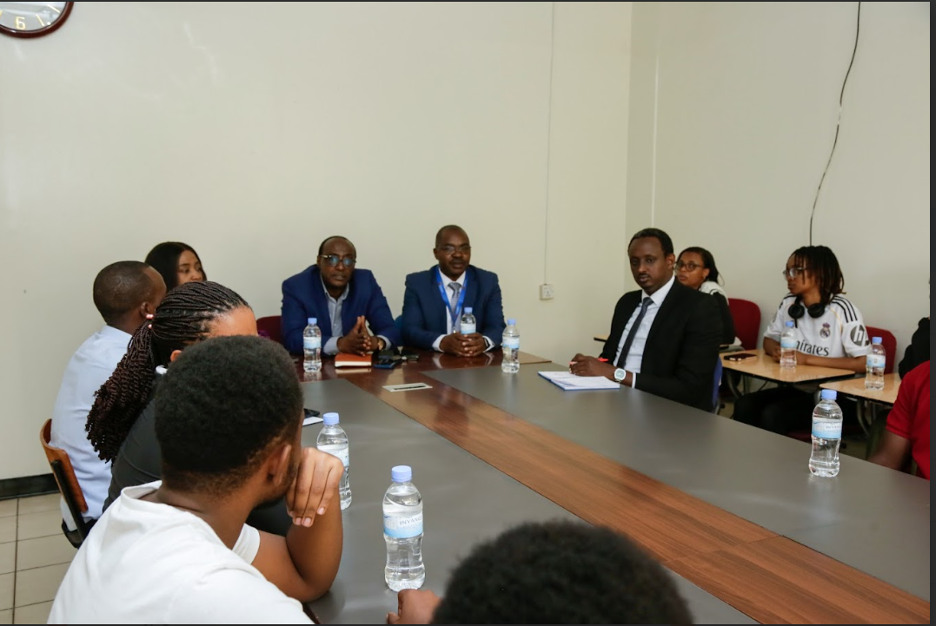
Chairman of the Board of Promoters, Professor Nshuti Manasseh, presided over a warm reception and farewell ceremony for twelve students connected through the Erasmus+ Student Exchange Program between the University of Kigali and the University of Ostrava in the Czech Republic. The occasion brought together six students from the University of Ostrava, accompanied by their parents, who had just completed an intensive eight-month academic and cultural exchange in Czech republic Europe . These students had been fully integrated into the academic programs of the School of Computing and IT, participated in local innovation hubs, and engaged with Rwandan students through collaborative projects and community initiatives. At the same time, six students from the University of Kigali were formally introduced as outgoing participants in the next phase of the exchange. These students will soon embark on their journey to the Czech Republic, where they will spend the next academic semester studying technology and innovation at the University of Ostrava. In his keynote speech, Professor Nshuti Manasseh welcomed the visiting families and expressed deep appreciation for the trust and collaboration fostered through this cross-border academic initiative. He commended the students from Ostrava for embracing the Rwandan culture and upholding the values of global citizenship during their time in Kigali. Turning his attention to the outgoing University of Kigali students, Professor Nshuti offered heartfelt advice and encouragement. “You are not only academic ambassadors of the University of Kigali but also cultural ambassadors of Rwanda,” he stated. “Let your discipline, humility, and commitment to excellence speak volumes in every classroom and every interaction you will have in Europe.” He stressed the importance of adaptability, respect for diversity, and academic integrity. With a reminder of the high expectations resting on their shoulders, he urged them to make the most of the opportunity, build international networks, and return home with knowledge and experiences that will contribute to Rwanda’s socio-economic development. Professor Kimathi George, Vice Chancellor of the University of Kigali, highlighted the university’s strategic commitment to international partnerships and its drive to cultivate global competencies among its students. “This program is not just about academic credits, it is about mindset, exposure, and the experience of innovation in different contexts,” he remarked. Professor Ogechi Adeola, the Deputy Vice Chancellor for Academic Affairs, applauded the students’ courage to step beyond borders and encouraged them to pursue excellence with curiosity and resilience. She emphasized the Erasmus+ program as a model of educational diplomacy, fostering collaboration, peace, and shared knowledge between continents. , Dean of the School of Computing and IT, shared insights into how the collaboration with the University of Ostrava began under the Erasmus+ framework, pointing out how the School of Computing and IT has become a leading pillar in driving internationalization within the university. He affirmed the school’s commitment to nurturing future-ready graduates with digital skills aligned to global demands. The Erasmus+ program, funded by the European Union, continues to be a powerful platform for fostering academic mobility, cross-cultural engagement, and institutional development. Since the launch of the partnership between the University of Kigali and the University of Ostrava.