University of Kigali joins KA171 Erasmus+ Mobility Project 2026
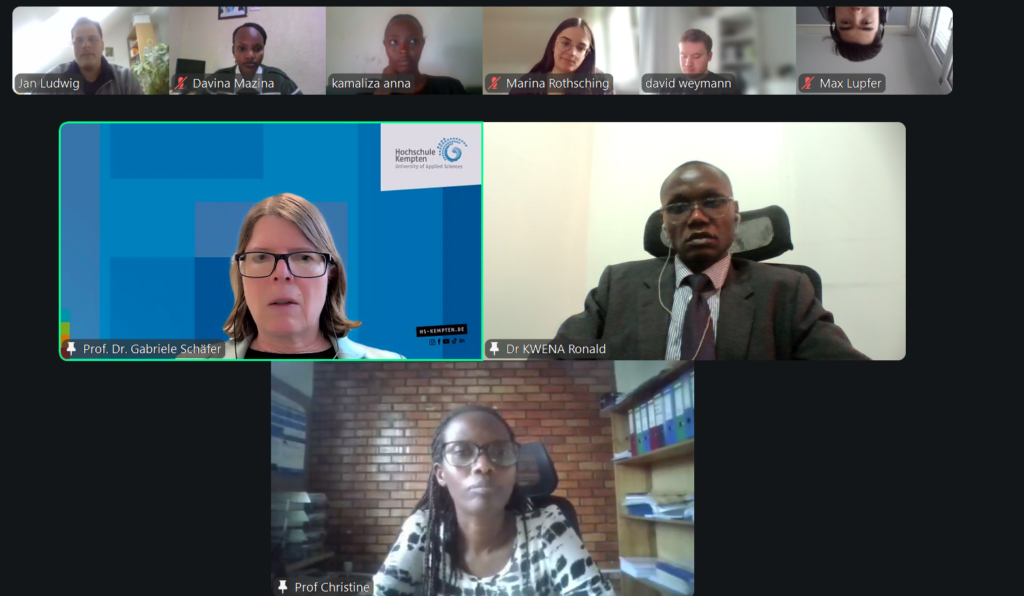
Four students from the University of Kigali have embarked on an exciting international academic journey through the KA171 Erasmus+ Mobility Project 2026, marking a significant milestone in the institution’s expanding global Research agenda. The initiative, led by Dr Ronald Kwena, the Associate Deputy Vice Chancellor for Research, Innovation and Enterprise as Principal Investigator, is being implemented in collaboration with Hochschule Kempten University of Applied Sciences, Germany. This partnership reflects a growing commitment to strengthening international research collaboration, student mobility, and innovation-driven learning. The programme brings together a diverse cohort of students from Germany, partner universities in the Western Balkans, and selected institutions across Rwanda; The students will be joining their counterparts from University of Rwanda (UR) and University of Lay Adventists of Kigali (UNILAK). Participants will engage in interdisciplinary teamwork, working virtually throughout the semester to co-develop innovative solutions to real-world challenges. The Erasmus+ KA171 funding framework supports this collaboration by covering travel and accommodation costs, ensuring equitable participation and fostering inclusive academic exchange. Throughout the semester, students will collaborate in multicultural teams, gaining exposure to different academic perspectives, digital collaboration tools, and problem-solving approaches. The programme emphasizes experiential learning, cross-cultural communication, and innovation, aligning closely with the University of Kigali’s strategic focus on research excellence and global competitiveness. The involvement of the Associate Deputy Vice Chancellor underscores the institution’s commitment to embedding internationalization within its research and enterprise agenda. The programme will culminate in a high-profile final event scheduled for 25 June 2026 at Hochschule Kempten in Germany. During this event, participating teams will present and pitch their project outcomes alongside activities linked to the renowned “5 Euro Business” course. Selected students, including representatives from the University of Kigali, will travel to Germany during calendar week 26 (22–26 June 2026) to participate in the final presentations, networking sessions, and collaborative engagements.This initiative not only enhances the academic and professional development of participating students but also strengthens institutional partnerships and reinforces the University of Kigali’s position within the global higher education landscape. By engaging in such collaborative platforms, students gain invaluable international exposure, positioning them as globally competent graduates ready to contribute to innovation and sustainable development in their respective regions.
University of Kigali Students Secure Paid Cybersecurity Internships
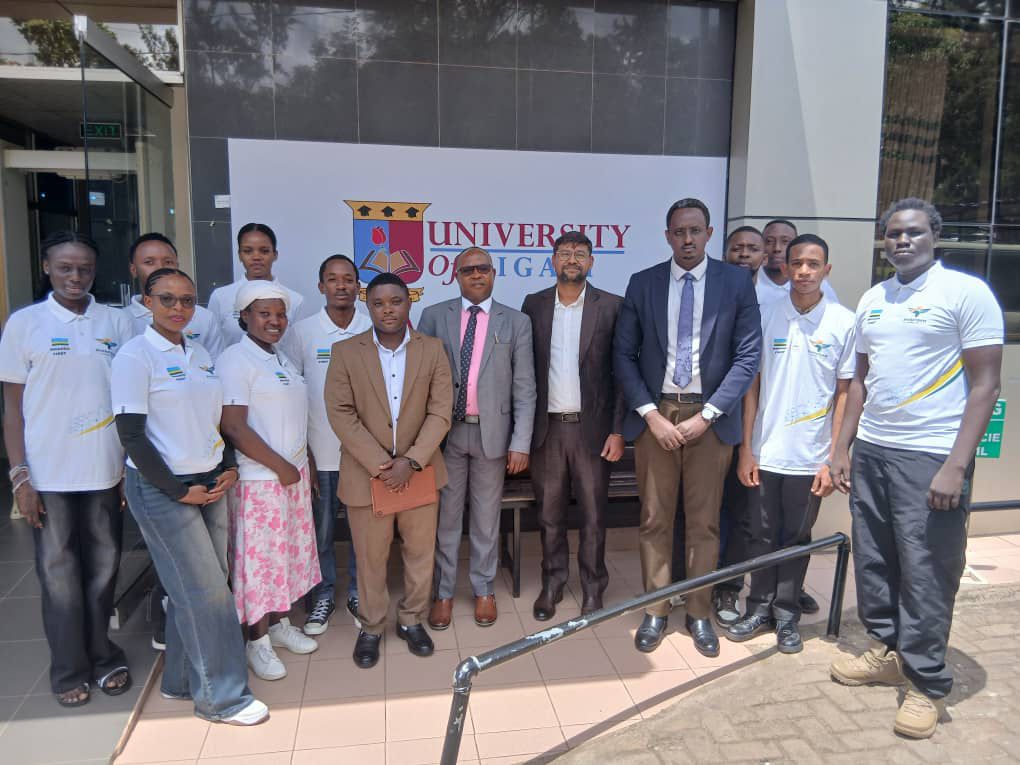
The University of Kigali is proud to announce that 14 students from the School of Computing and Information Technology have successfully secured paid internships with BharatSiam Cybersecurity Global Rwanda Ltd. The internships, which will run for a period of three months, come after the students successfully completed their examinations. This achievement reflects both the students’ dedication and the University’s commitment to equipping learners with industry-relevant skills. A highlight of the day was a special visit from the CEO of BharatSiam Cybersecurity Global Rwanda Ltd, Ankush Deoghare, who personally came to congratulate the selected students. During his visit, he commended their performance and encouraged them to make the most of this opportunity to gain practical experience in the field of cybersecurity. This milestone underscores the strong partnership between the University of Kigali and industry stakeholders, aimed at creating meaningful opportunities for students to transition from academic learning to real-world application. The University continues to prioritize experiential learning, ensuring that its graduates are well-prepared to meet the demands of the evolving digital and cybersecurity landscape.
UoK Showcases Innovation at ICGSD
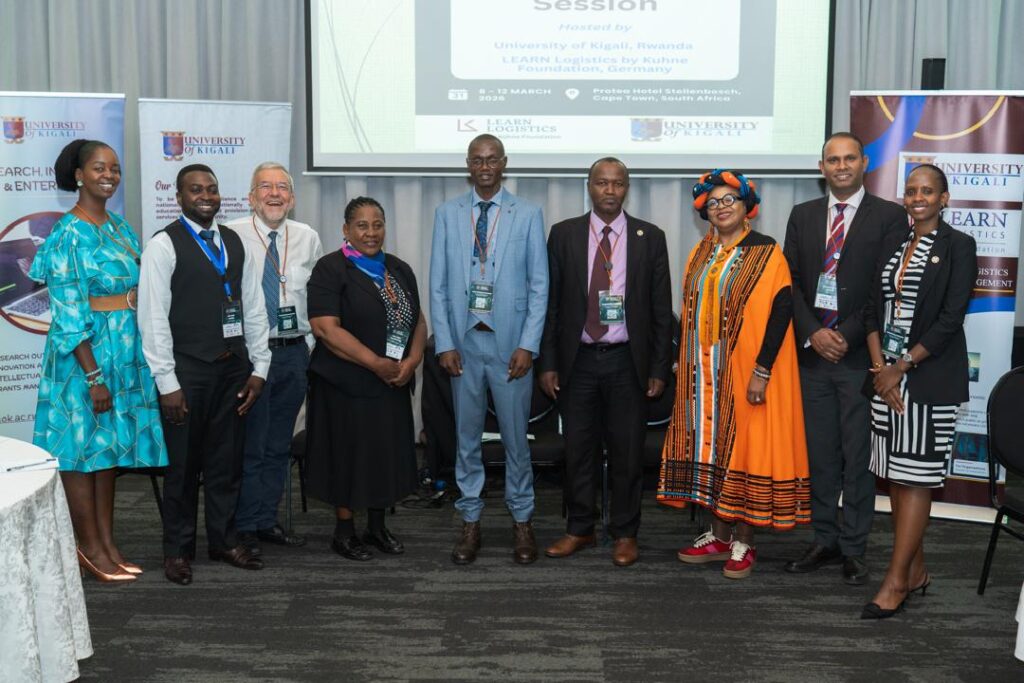
The University of Kigali (UoK) continued to demonstrate strong academic leadership on Day 2 of the International Conference on Green Sustainable Development (ICGSD) 2026. UoK Showcases Research and Innovation Leadership at ICGSD 2026 through these initiatives, reinforcing its commitment to sustainable development. Furthermore, UoK Showcases Research and Innovation Leadership at ICGSD 2026 by continuously supporting innovative projects in the sustainability sector. UoK hosted the Innovation Showcase, chaired by Dr. Ronald Kwena, highlighting innovative research and solutions addressing global sustainability challenges. The University also convened the Sustainable Supply Chain Session in collaboration with LEARN Logistics by Kühne Foundation. The session was moderated by Luzinda Umar and featured an esteemed panel comprising Dr. Simon Peter Nadeem (LEARN Logistics by Kühne Foundation, Germany), Prof. Alfonso Heras Duras (Universidad Carlos III de Madrid, Spain), and Dr. Martin Gachukia (University of Kigali, Rwanda), who shared expert insights on advancing sustainable supply chain systems. In addition, several UoK scholars including Virginie Mukasonga, Annet Muberarugo, James Hakizimana, Peace Kajura, and Stratton Ndyamuba presented their research papers during the PhD Colloquium as part of their ongoing doctoral programmes. Notably, UoK Showcases Research and Innovation Leadership at ICGSD 2026 as a hub for academic excellence and sustainability. The day’s main programme was expertly directed by Prof. Wasajja Kiwanuka, ensuring a vibrant exchange of ideas and reinforcing the University of Kigali’s commitment to research, innovation, and global academic collaboration. Lastly, these activities highlight how UoK Showcases Research and Innovation Leadership at ICGSD 2026 through active participation and thought leadership.
UoK Advances Circular Waste Research
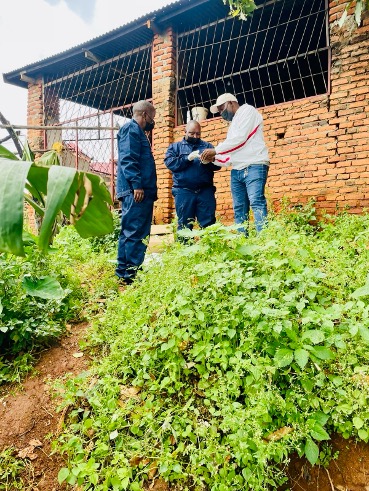
University of Kigali Research Department commenced the second phase of the Circular Economy: Waste Analysis and Characterization Study in Rusizi District on February 25, 2026. The team comprises a Principal Investigator, Solid Waste management experts, Geographic Information System (GIS) Experts and Data Collectors. The Study which commenced in January 2026 is divided in to different components including Conducting baseline waste audit, Identifying Waste Segregation facilities, GIS Mapping of Waste Systems, Waste Wise Cities (WaCT) Survey. A second team from University of Lay Adventists of Kigali (UNILAK) is undertaking a similar exercise in Nyamasheke District. The Research is supported by Spanish Red Cross, Rwanda Red Cross Society and Funded by European Union. The study is aimed at Supporting Sustainable Municipal Waste Management and Circular Economy Transitions by generating comprehensive, reliable data on waste streams in Nyamasheke and Rusizi to inform strategic improvements in waste management systems that align with national policies and international best practices. The Study also aims to improve water quality in the Lake Kivu basin through sustainable economic practices based on circular economy principles and their application in inclusive local solid waste management; Foster knowledge, behavioral change and policy / business decisions towards resilient and circular economy involving LGUs, CBOs, MSMEs and Waste collectors; and Support inclusive circular economy initiatives tested and validated, focused on efficient alternatives for processing recycled plastic and organic waste.
University of Kigali Accelerates Research, Innovation and Enterprise Agenda
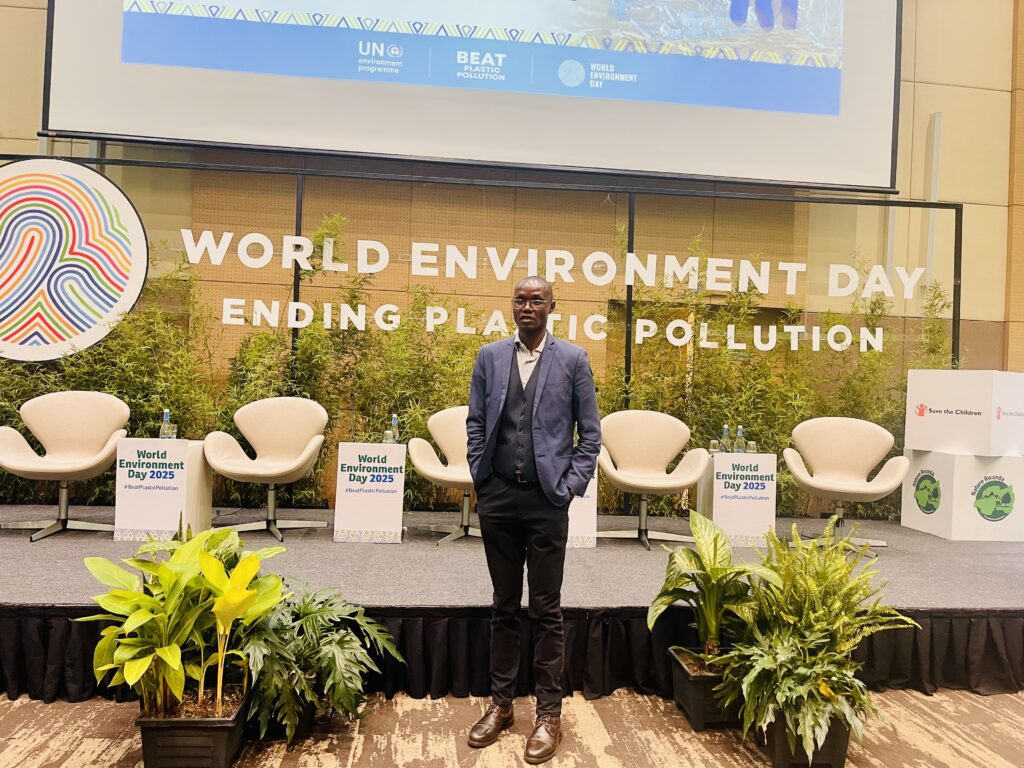
The University of Kigali (UoK) is steadily redefining its research and innovation landscape. Strategic investment, deliberate institutional reforms, and expanding industry partnerships are translating into measurable growth in research productivity, enterprise engagement, and postgraduate capacity. What was once an emerging research portfolio is now evolving into a structured, impact-oriented ecosystem anchored in Research, Innovation and Enterprise (RIE). The strengthening of the Research, Innovation and Enterprise function marked a strategic shift for UoK,” they noted. “It allowed us to move from fragmented research activities to a coordinated, performance-driven system aligned with national development priorities. This structural strengthening has yielded visible results. Research output has grown consistently, supported by improved internal review systems, clearer publication incentives, and strengthened postgraduate supervision structures. Faculties in Business and Economics, Computing, Law, Education, and Health Sciences are contributing to a rising volume of peer-reviewed publications, policy briefs, and applied research outputs aligned with Rwanda’s transformation agenda. Behind this progress is a fit-for-purpose Research, Innovation and Enterprise Unit tasked with research capacity development, grant mobilisation, ethics oversight, intellectual property management, and industry linkages. Over the past three years, the unit has institutionalised research guidelines, streamlined proposal development support, enhanced postgraduate dissertation monitoring systems, and introduced structured research seminars to cultivate a vibrant academic culture. Academic depth has simultaneously expanded. The proportion of permanent academic staff holding doctoral qualifications continues to rise, strengthening supervision capacity and enhancing the quality of postgraduate training. This deliberate investment in academic qualifications directly supports timely completion rates and improves the research experience of Master’s and emerging doctoral candidates. As the leadership emphasises, “strong supervision capacity is central to student success and institutional credibility.” Funding diversification has also become a defining feature of UoK’s growth. The University has broadened its engagement beyond traditional tuition-based financing to include private-sector partnerships, climate finance collaboration, logistics sector engagement, and applied research contracts. Partnerships in plastic recycling, waste management analysis in Rusizi, sustainable agriculture innovations, electric mobility research collaboration, and climate-focused conferences demonstrate the University’s ability to translate academic knowledge into real-world solutions. In particular, UoK’s positioning as both a Green University and a Financial University reflects its commitment to linking sustainability, enterprise, and applied research. The proposed Climate Action and Sustainable Development Innovation Research Centre further exemplifies this ambition by integrating climate research, youth entrepreneurship, ESG compliance capacity building, and green finance pipeline development. The University’s logistics and supply chain management ecosystem has also gained momentum. Through industry partnerships and the Centre for Applied Logistics and Supply Chain Management, students engage in practical learning models that connect theory to warehouses, transport corridors, and e-commerce systems. This integration of applied learning with research strengthens graduate employability while deepening industry trust. Institutional governance frameworks have matured alongside these developments. Since 2022, updated policies have been introduced to govern research ethics, intellectual property, research rewards, data management, and research centre operations. Ethical review processes have been stabilised and formalised, ensuring that all research activities meet national and international standards. Innovation and commercialisation pathways are equally strengthening. The University is progressively building mechanisms to protect intellectual property, support prototype development, and explore patent registration opportunities. Enterprise incubation efforts within logistics, circular economy, agri-processing, and digital innovation are beginning to generate revenue streams that reinforce institutional sustainability. Digital transformation has added further efficiency to the research lifecycle. Online research tracking systems, digital dissertation submission platforms, and electronic ethics clearance processes are shortening turnaround times and enhancing transparency in research management. Taken together, these milestones represent more than incremental improvement. They reflect an institution intentionally building a research culture anchored in accountability, partnership, and national relevance. The trajectory demonstrates that UoK is transitioning from a primarily teaching-focused institution into a dynamic, innovation-oriented university that contributes directly to Rwanda’s economic transformation. As the leadership affirms, “The University of Kigali is not merely expanding its research footprint; it is strategically positioning itself as a hub for applied research, enterprise development, and sustainable innovation. Our focus is measurable impact, strengthened governance, and research that responds to national and regional priorities.” With growing academic depth, expanding partnerships, and structured research governance, the University of Kigali is advancing confidently toward its goal of becoming a recognised centre of excellence in research, innovation, and enterprise in the region.